EXPLORATION · 12 July 2026
Today
Today
Today
A place for you and your agent to turn scattered context into a clear, executable day.
A place for you and your agent to turn scattered context into a clear, executable day.
A place for you and your agent to turn scattered context into a clear, executable day.

Today started from a simple frustration that is easy to recognize if you work across multiple tools and contexts. Work is usually spread across too many places. Slack messages, emails, calendar events, tasks, notes, things you meant to do but didn’t write down properly. All the information exists, but it rarely comes together in a way that helps answer a basic question:
Today started from a simple frustration that is easy to recognize if you work across multiple tools and contexts. Work is usually spread across too many places. Slack messages, emails, calendar events, tasks, notes, things you meant to do but didn’t write down properly. All the information exists, but it rarely comes together in a way that helps answer a basic question:
What should I actually focus on today and right now?
What should I actually focus on today and right now?
That gap between having information and being able to act on it is what this project is trying to address.
That gap between having information and being able to act on it is what this project is trying to address.
For some people, especially those with AD(H)D or similar attention challenges, this fragmentation becomes even more intense. Context is constantly shifting, and the effort of pulling everything together can take as much energy as the work itself. Today is partly an attempt to reduce that friction.
For some people, especially those with AD(H)D or similar attention challenges, this fragmentation becomes even more intense. Context is constantly shifting, and the effort of pulling everything together can take as much energy as the work itself. Today is partly an attempt to reduce that friction.
Not another AI tool
Not another AI tool
At first, I thought of it as a structured interface for working with Codex like a place where AI-assisted work could live outside of chat and feel more persistent.
At first, I thought of it as a structured interface for working with Codex like a place where AI-assisted work could live outside of chat and feel more persistent.
But over time, that framing started to feel slightly off.
But over time, that framing started to feel slightly off.
The more interesting shift is not “an AI tool with features”, but the fact that people are already starting to rely on their own agents — systems that know their preferences, their work, and the tools they use every day.
The more interesting shift is not “an AI tool with features”, but the fact that people are already starting to rely on their own agents — systems that know their preferences, their work, and the tools they use every day.
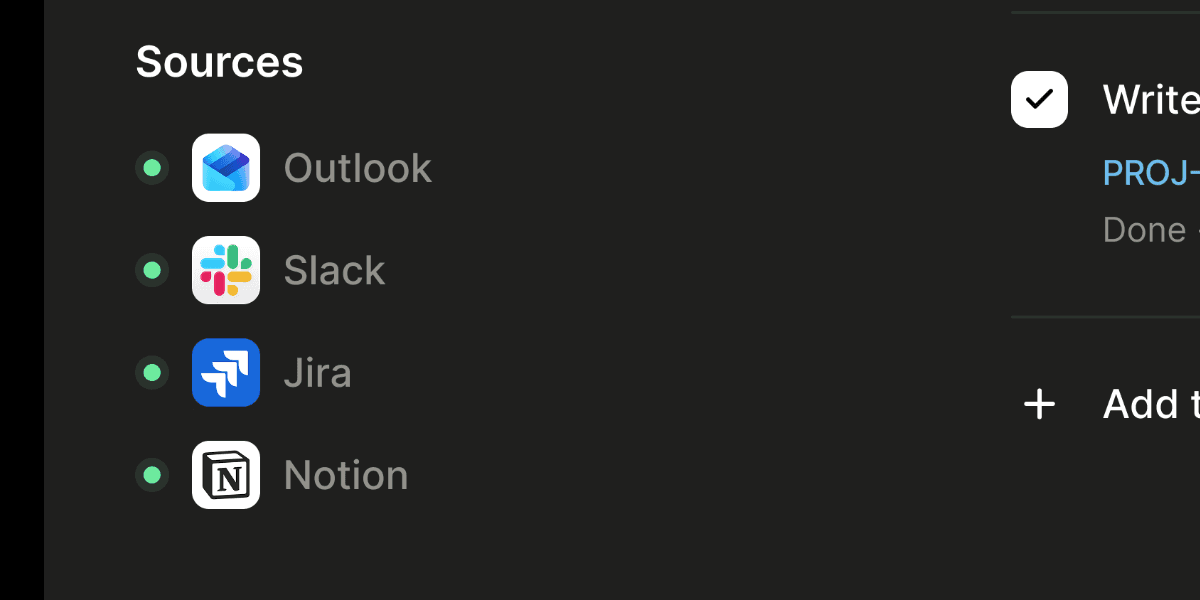
You bring your agent, connect the sources it can work with, define what should happen automatically, and Today turns that continuous flow of context into something clear, structured, and ready to act on everyday.
You bring your agent, connect the sources it can work with, define what should happen automatically, and Today turns that continuous flow of context into something clear, structured, and ready to act on everyday.
Designing around orchestration, not chat
Designing around orchestration, not chat
Once I made that decision, the product became less about designing an AI interface and more about designing a system. There are sources where context comes from. There are automations that decide when and why the agent should look at them. There is information that needs to become part of today's plan. There are tasks, meetings, notes and unresolved threads that compete for attention. And there are actions an agent can help with, some of which should still require the user's review or approval.
Once I made that decision, the product became less about designing an AI interface and more about designing a system. There are sources where context comes from. There are automations that decide when and why the agent should look at them. There is information that needs to become part of today's plan. There are tasks, meetings, notes and unresolved threads that compete for attention. And there are actions an agent can help with, some of which should still require the user's review or approval.
Today sits between those layers.
Today sits between those layers.
The agent does the reasoning and work it is good at. Today gives that work structure, hierarchy and a predictable place to live. That separation became an important product principle. I did not want to rebuild email, calendars, task managers or AI agents. I wanted to design the layer that helps them work together.
The agent does the reasoning and work it is good at. Today gives that work structure, hierarchy and a predictable place to live. That separation became an important product principle. I did not want to rebuild email, calendars, task managers or AI agents. I wanted to design the layer that helps them work together.
Turning context into attention
Turning context into attention
A useful daily plan cannot just be a summary of everything that happened. It has to make decisions about attention. Something someone asked for yesterday might matter more than a task sitting in a backlog. A meeting later in the day might create work that needs preparation now. An unread message might be irrelevant, while another one changes the priorities of the entire day.
A useful daily plan cannot just be a summary of everything that happened. It has to make decisions about attention. Something someone asked for yesterday might matter more than a task sitting in a backlog. A meeting later in the day might create work that needs preparation now. An unread message might be irrelevant, while another one changes the priorities of the entire day.
So the interface is intentionally opinionated about hierarchy. Instead of presenting another operational dashboard full of equally weighted information, Today tries to answer a few questions immediately:
So the interface is intentionally opinionated about hierarchy. Instead of presenting another operational dashboard full of equally weighted information, Today tries to answer a few questions immediately:
What matters most?
What requires my attention?
What can I realistically do today?
What can my agent help me move forward?
What matters most?
What requires my attention?
What can I realistically do today?
What can my agent help me move forward?
The goal is not to expose more information. It is to reduce the amount of information the user has to personally organize.
The goal is not to expose more information. It is to reduce the amount of information the user has to personally organize.
Turning context into attention
Turning context into attention
There is quite a lot of information behind Today, but I did not want the product to feel like a traditional productivity dashboard. The visual direction is intentionally quiet. Most of the interface stays neutral, with color reserved for meaning and state. Typography, spacing, borders, shadows and iconography do a lot of the organizational work.
There is quite a lot of information behind Today, but I did not want the product to feel like a traditional productivity dashboard. The visual direction is intentionally quiet. Most of the interface stays neutral, with color reserved for meaning and state. Typography, spacing, borders, shadows and iconography do a lot of the organizational work.
Information is grouped into clear, persistent areas so that returning to Today does not require re-learning the interface every time. The challenge is finding the point where the product can be information-dense without becoming cognitively dense. A user should be able to open Today, understand the shape of their day within seconds, and know where to start.
Information is grouped into clear, persistent areas so that returning to Today does not require re-learning the interface every time. The challenge is finding the point where the product can be information-dense without becoming cognitively dense. A user should be able to open Today, understand the shape of their day within seconds, and know where to start.
Notes are context, not a dead end
Notes are context, not a dead end
One small example of the broader idea is notes. In many productivity tools, a note is something you write and later have to remember to do something with. In Today, I think of notes as potential context. A quick thought can inform today's plan. A reminder can become a task. Something written after a meeting can help the agent understand what needs to happen next.
One small example of the broader idea is notes. In many productivity tools, a note is something you write and later have to remember to do something with. In Today, I think of notes as potential context. A quick thought can inform today's plan. A reminder can become a task. Something written after a meeting can help the agent understand what needs to happen next.
The same principle applies elsewhere in the product: information should be able to move through the system instead of becoming trapped inside individual features.
The same principle applies elsewhere in the product: information should be able to move through the system instead of becoming trapped inside individual features.
Today is deliberately still an exploration.
Today is deliberately still an exploration.
The concept has already moved quite far from its first version, and I expect parts of it to keep changing as I use it and build more of the underlying system. But one thing has stayed consistent is the core idea:
The concept has already moved quite far from its first version, and I expect parts of it to keep changing as I use it and build more of the underlying system. But one thing has stayed consistent is the core idea:
Your agent already has intelligence. Your tools already contain the context. Today is the layer that turns both into a day you can actually act on.
Your agent already has intelligence. Your tools already contain the context. Today is the layer that turns both into a day you can actually act on.
The interesting design problem for me is deciding what deserves the user's attention, what should happen automatically, where human judgment should remain in the loop, and how all of that can feel simple even when the system underneath it is not.
The interesting design problem for me is deciding what deserves the user's attention, what should happen automatically, where human judgment should remain in the loop, and how all of that can feel simple even when the system underneath it is not.